As an Amazon Associate, Steady Home Advice earns from qualifying purchases. This article contains affiliate links; buying through them costs you nothing extra. Read our affiliate disclosure.
A missed doorbell sounds like a small problem until it isn't. A parcel goes back to the depot, a home care worker is left waiting on the step, or a neighbor who came to check in walks away thinking nobody is home. For an older adult with hearing loss, a standard chime in the hallway is often too quiet, too high-pitched or simply in the wrong room. A loud doorbell chime with a flashing light or a vibrating receiver fixes this without any wiring. This guide explains which alert suits which person, how many receivers you need, and compares six wireless kits using the specs from their listings.
Why ordinary doorbells get missed
Age-related hearing loss usually affects high-pitched sounds first, and many standard chimes use exactly those tones. Hearing aids help, but many people take them out at home, for a nap or in the evening. Distance matters too: a chime in the hallway may be heard in the living room but not in the kitchen with the tap running, the back bedroom, or the garden. And a TV turned up loud can drown out almost anything.
Three ways a doorbell can alert
Loud, adjustable sound
The simplest upgrade is a plug-in chime with more volume and a choice of tunes. Listings for the kits below quote maximum volumes from about 90 to 110 dB. That can be enough for mild to moderate hearing loss. Louder is not always clearer, though. Try several tunes and pick the one your parent hears best, often a lower, simpler "ding-dong". Use the lowest volume that works.
Flashing light or strobe
A flashing receiver works without any hearing at all, as long as the person can see it. It suits someone who spends most of the day in one or two rooms, such as a living room chair and the kitchen. Place the light where it sits in their line of sight, not behind them. Bright daylight can wash out a small light, so check it at different times of day. If your parent has light sensitivity or a history of seizures, ask their doctor whether a flashing alert is suitable, and look for kits that let you dim the light or switch it off.
Vibration
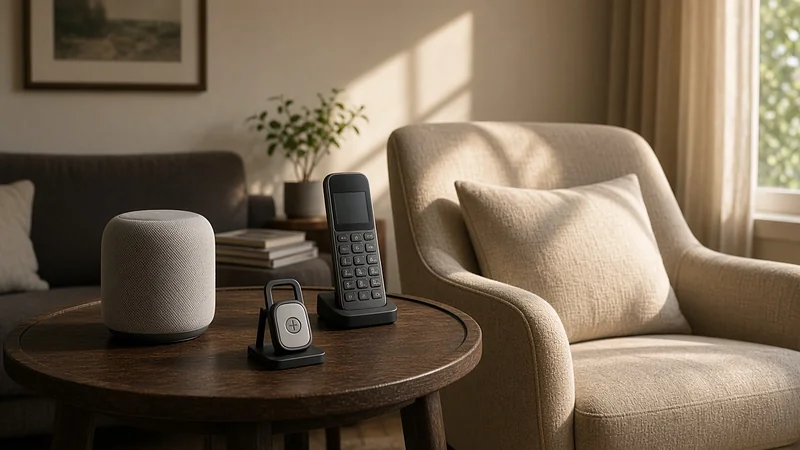
A small portable receiver that vibrates in a pocket or on a belt clip is the most dependable alert for someone who moves around the home, works in the garden, or may not be looking at a light. Vibration also suits households where a loud chime would wake a partner. Portable receivers do need batteries.
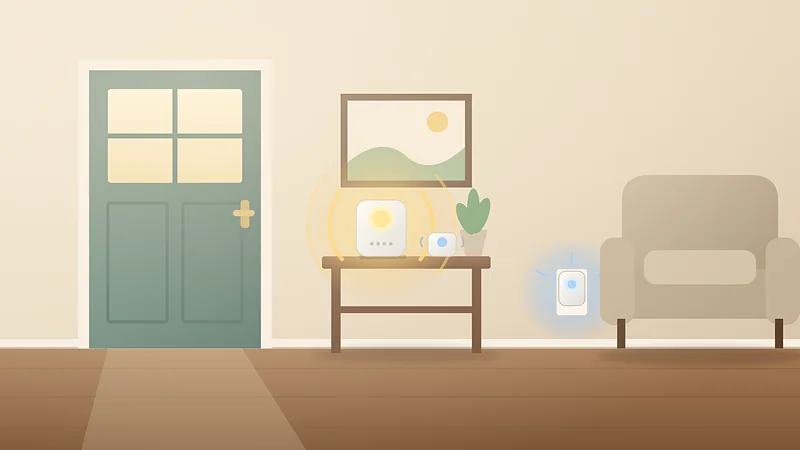
Many people do best with two modes together, for example a flashing plug-in unit in the living room plus a vibrating receiver they carry. If one signal is missed, the other catches it.
Plan receivers room by room
Before buying, walk through a normal day with your parent and note where they are when someone might knock. Then count receivers:
- Main sitting room: a plug-in flashing chime in their line of sight from their usual chair.
- Kitchen: a second plug-in unit, or a portable receiver on the counter.
- Bedroom: a portable receiver on the nightstand, so a carer arriving early or a neighbor at night is not missed.
- Garden, garage or workshop: a portable receiver on a belt clip, or a long-range kit if the outbuilding is far from the door.
- Back or side door: an extra push button, if visitors or carers use it.
Plug-in receivers need a free outlet that is not hidden behind furniture. If outlets are scarce or awkward to reach, battery receivers are easier. For general tips on setting up each room, see our home safety checklist for elderly parents.
The kits compared
All six products below are wireless kits with a battery push button for the door. We have not tested them; the details come from each product's Amazon listing. Listed ranges are measured in open space, and walls, floors, metal doors and appliances shorten the real range.
Best for carrying around: CallToU vibrating and flashing doorbell
This kit's receiver is designed to be carried. It has a back clip for a belt or pocket and four alert modes, including vibration with sound, flashing light with sound, all three together, and flash only. It suits someone who moves between rooms or goes into the garden.
CallToU Hearing Impaired Doorbell, vibrating and flashing
Portable wireless receiver with belt clip; modes for ringing, vibration and flashing light; adjustable volume; battery operated
Pros
- Vibrates on the belt, not just flashes
- Carry it room to room
Cons
- Receiver needs charging or batteries
- Range depends on walls
Best for two people or two rooms: CallToU 1 button and 2 receivers
This version comes with two portable battery receivers. Keep one by your parent's chair and one by the bed, or give the second to a partner or live-in carer. Each receiver can use any mix of ringtone, flashing light and vibration, and the mute settings allow flash-only or vibration-only alerts for a quiet home.
CallToU Wireless Hearing Impaired Doorbell, 1 Button and 2 Portable Receivers
Two battery receivers (3 AAA each) with belt clips; sound, flashing light and vibration in combinations, including flash-only and vibration-only; 20 ringtones; 5 volume levels from mute to 110 dB per listing; IP65 button; listed range up to 1,000 ft; no Wi-Fi or app
Pros
- Two portable receivers, so one can stay by the bed
- Vibration-only mode for quiet homes
Cons
- Receivers run on AAA batteries that need changing
- Small receivers are easy to misplace
Best for whole-home coverage: wireless flashing doorbell with 3 receivers
With three plug-in receivers in the box, this kit covers a living room, kitchen and bedroom from one button. Each receiver can be set to ring only, flash only, or flash while ringing, and the receivers can use different tunes.
Wireless Flashing Doorbell with 3 Receivers
One waterproof button and 3 plug-in receivers; ringing, flashing or both; 36 chimes, 4 volume levels
Pros
- Receivers for several rooms
- Flash-only mode
Cons
- Plug-in receivers need outlets
- Brightness may not be enough in sunny rooms
Best single strobe: Safeguard Supply LRA-D1000S
This kit has one plug-in receiver with a built-in strobe that can be turned on or off, plus adjustable volume. It is a good starting point if your parent is mostly in one room, and the system can be extended later with extra plug-in strobes, portable strobe receivers or a second button for the back door.
Safeguard Supply LRA-D1000S Wireless Doorbell Kit with Plug-in Strobe
Plug-in receiver with built-in strobe that can be switched on or off; 18 tunes; adjustable volume up to 95 dB per listing; battery push button (CR2032 included); listed range up to 1,000 ft; expandable with extra plug-in strobe, portable strobe receivers and extra buttons
Pros
- Strobe can be turned off for sound-only use
- Add more receivers or a back-door button later
Cons
- Plug-in receiver needs a free outlet in a visible spot
- Only one receiver in the box
Best for a silent visual alert: Security2020 WC180
The WC180 pairs a plug-in strobe receiver with a choice of 58 melodies, and it has a strobe-only mode. That is useful if a loud chime bothers others in the home, or if your parent does not hear any chime at all. Its listed range is shorter than some other kits, so it suits smaller homes and apartments.
Security2020 WC180 Wireless Door Chime with Flashing Strobe
Plug-in receiver with flashing strobe and 92 dB chime per listing; strobe-only mode; 58 melodies with adjustable volume; weather-resistant push button; listed range up to 600 ft; expandable with extra buttons and receivers
Pros
- Strobe-only mode for a silent visual alert
- Long-running model with add-on parts
Cons
- Shorter listed range than some kits
- One receiver covers one room
Best for large homes and outbuildings: Safeguard Supply ERA-DCKIT
This long-range kit is built for distance. Its listing quotes a 4,000 ft range and a 433 MHz signal intended to pass through brick and multiple walls, with a strobe on the plug-in receiver and a button LED that shows the visitor their press was sent. Consider it for a large house, a detached garage or a workshop at the end of the garden.
Safeguard Supply ERA-DCKIT Long Range Wireless Doorbell Kit
Plug-in receiver with flashing strobe; adjustable volume up to 90 dB; 12 melodies; weatherproof button with green confirmation LED; 433 MHz signal; listed range up to 4,000 ft; button battery listed to last 2 to 4 years
Pros
- Very long listed range for large homes, garages or outbuildings
- Button LED confirms the press to the visitor
Cons
- Fewer tunes than other kits
- Built for range rather than portability
| Product | Key specs | Link |
|---|---|---|
| CallToU Hearing Impaired Doorbell, vibrating and flashing | Portable wireless receiver with belt clip; modes for ringing, vibration and flashing light; adjustable volume; battery operated | Check price on Amazon (opens in a new tab) |
| CallToU Wireless Hearing Impaired Doorbell, 1 Button and 2 Portable Receivers | Two battery receivers (3 AAA each) with belt clips; sound, flashing light and vibration in combinations, including flash-only and vibration-only; 20 ringtones; 5 volume levels from mute to 110 dB per listing; IP65 button; listed range up to 1,000 ft; no Wi-Fi or app | Check price on Amazon (opens in a new tab) |
| Wireless Flashing Doorbell with 3 Receivers | One waterproof button and 3 plug-in receivers; ringing, flashing or both; 36 chimes, 4 volume levels | Check price on Amazon (opens in a new tab) |
| Safeguard Supply LRA-D1000S Wireless Doorbell Kit with Plug-in Strobe | Plug-in receiver with built-in strobe that can be switched on or off; 18 tunes; adjustable volume up to 95 dB per listing; battery push button (CR2032 included); listed range up to 1,000 ft; expandable with extra plug-in strobe, portable strobe receivers and extra buttons | Check price on Amazon (opens in a new tab) |
| Security2020 WC180 Wireless Door Chime with Flashing Strobe | Plug-in receiver with flashing strobe and 92 dB chime per listing; strobe-only mode; 58 melodies with adjustable volume; weather-resistant push button; listed range up to 600 ft; expandable with extra buttons and receivers | Check price on Amazon (opens in a new tab) |
| Safeguard Supply ERA-DCKIT Long Range Wireless Doorbell Kit | Plug-in receiver with flashing strobe; adjustable volume up to 90 dB; 12 melodies; weatherproof button with green confirmation LED; 433 MHz signal; listed range up to 4,000 ft; button battery listed to last 2 to 4 years | Check price on Amazon (opens in a new tab) |
Specs are from manufacturer and retailer listings and can change between versions; check the listing before you buy. We don't show prices because they change often; the button shows the current price on Amazon.
How to choose
- Match the alert to the hearing. Mild loss: louder chime with a clear tone. Moderate to severe loss, or hearing aids out at home: add a flashing light. Deaf, very mobile, or often in the garden: a vibrating portable receiver.
- Count the rooms. One receiver rarely covers a whole home. Plan for every room your parent uses, plus the bedroom.
- Check the outlets. Plug-in receivers need a free, visible outlet. Battery receivers can go anywhere but need battery changes.
- Think about range. Two-story homes, thick walls and outbuildings need more range. Test the kit at every receiver spot before you settle on placement.
- Keep it simple. Pre-paired kits with no app or Wi-Fi are easier for many older adults to live with than smart systems.
Setup tips
- Test before mounting the button. Hold the button at the front door while someone checks each receiver, then fix it with screws or the supplied adhesive.
- Mount the button at a sensible height and in a lit spot, so visitors can find it at night. Our guide to battery motion step lights for outdoor steps covers lighting the approach.
- Set tunes per room if the kit allows it, so your parent can tell the front door from the back door.
- Test monthly, for example on the same day you test smoke alarms.
Beyond the doorbell
A missed doorbell is often the first sign that other sounds are being missed too, such as a phone, a kitchen timer or, most importantly, a smoke alarm. If your parent cannot hear the doorbell, check that they would hear a smoke alarm from their bed with hearing aids out. Alarms with strobe lights or bed shakers exist for exactly this.
Good lighting helps a person get to the door safely once they know someone is there, especially at night. See our guide to plug-in motion night lights for hallways for the path from the bedroom or living room to the front door.
FAQ
Do I need to replace my existing doorbell?
No. The kits here are self-contained, with their own wireless button and receivers. You can leave the old wired doorbell in place and fit the new button beside it, or remove the old button and cover the hole.
Will a flashing doorbell work in a bright room?
A small flashing light can be hard to notice in direct sunlight. Place the receiver out of direct sun and in the person's line of sight, and add a vibrating portable receiver if they are often in bright rooms or outside.
How many receivers does my parent need?
One for each room where they spend real time, usually the living room, kitchen and bedroom. Many kits can be expanded with extra receivers later, so you can start with one or two and add more.
Do these doorbells need Wi-Fi or an app?
No. The kits compared here use their own radio signal between button and receiver, and the listings describe them as pre-paired or plug-and-play. That makes them simpler than smart video doorbells for many older adults.
Can a vibrating receiver be used at night?
Yes. A portable receiver on the nightstand, set to vibrate and flash, can alert someone in bed without a loud chime. It will not wake a heavy sleeper the way a bed shaker does, so for night-time safety focus on smoke alarms with a bed shaker or strobe.